— ABOUT
A scientist who learned to get more out of science the hard way.
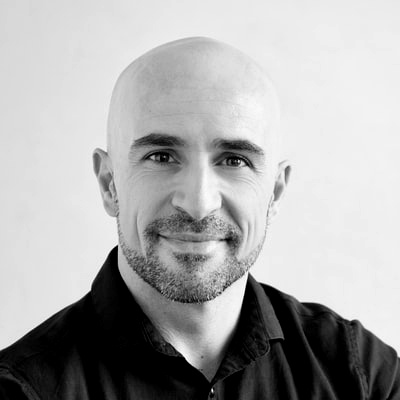
I grew up in Seville, in a family that was, by any honest measure, ordinary.
My parents weren't health-conscious. They smoked. They drank wine in moderation. They ate bread with everything, which is what Spaniards do. They installed in me a sense of self-discipline and a quiet ambition to stretch beyond the comfort zone — and then they let me go.
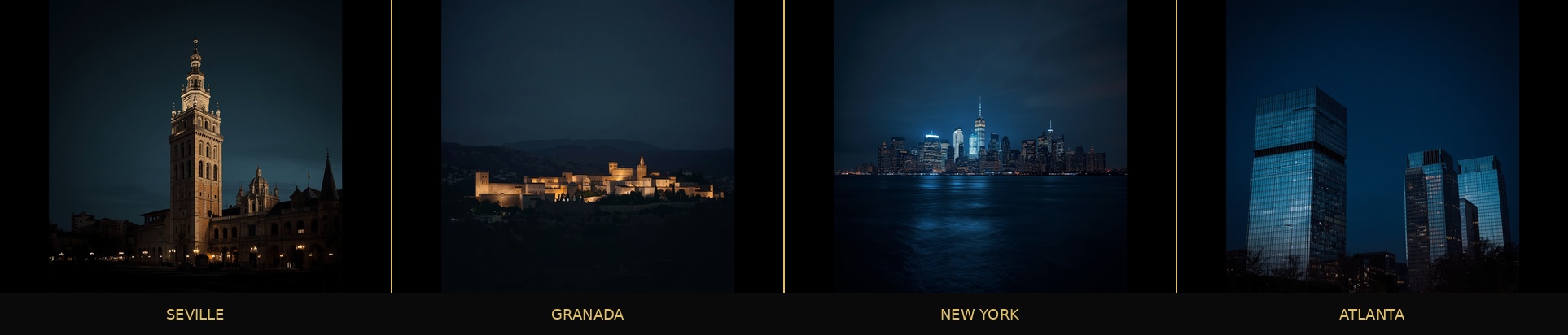
I left for Granada to study exercise physiology, stayed seven years, completed a Master's, started a Ph.D., and came home to Seville to finish it. I thought I was returning to focus. I was returning, it turned out, for a different reason.
In 2007 my father was diagnosed with Grade III–IV bladder cancer.
I was twenty-something, finishing a doctorate in the science of how bodies work, and I had no preparation for what it meant to watch one fall apart. I had been saving to open my own training studio. I spent every euro of it on books, on supplements, on anything I could read or learn that might help him. I built him a nutritional protocol out of what I was teaching myself in real time — orthomolecular medicine, functional nutrition, the work of clinicians willing to be called names by their colleagues for stepping outside the standard of care.
My father survived. I will not claim my protocol was the reason. I will say that his recovery — his energy, his strength, his absence of the side effects that usually accompany chemotherapy — was not what the literature predicted. Something was happening that exceeded what any single discipline could explain. That experience reorganized my career. I stopped being only an exercise physiologist and started becoming something harder to name: a translator between disciplines, a synthesizer of approaches, a clinician of lifestyle.
I have spent the twenty years since refining what that means.
I went deep into nutrition — Cellular Nutrition and Orthomolecular Therapy, Precision Nutrition coaching, ReCODE 2.0 training in the only clinical protocol shown to reverse early-stage cognitive decline. I kept the strength foundation (CSCS, blood-flow restriction, national-level coaching credentials in track and triathlon) because muscle is metabolic currency and most clinicians underestimate how much it matters.
I directed fitness and nutrition for a women's wellness franchise. I moved to New York and built a private consulting practice — high-achieving executives with impossible schedules, athletes, physicians who wanted lifestyle expertise embedded inside their own programs. I learned how to work with doctors as peers rather than as a fitness adjunct.
In Atlanta, I joined PartnerMD as one of the most-requested health coaches on the concierge medical team. I lectured the practice's physicians on lifestyle medicine and trained them in clinical AI prompting — how to get accurate, contextualized outputs from a tool most physicians were still learning to trust. I continue to work with Dr. Glashow and Dr. Raffaele in New York. I mentor a personal trainer building his own practice on a model he learned from watching how I partner with physicians: find the right MDs, integrate, don't compete.
The clients I am proudest of are not the easy ones. I work with a woman who walked in well inside pre-diabetes and is now metabolically pristine, lifting a hex bar loaded to more than eighty-five percent of her bodyweight while she pushes back against osteopenia. That is the work. The case study lives elsewhere on this site.
The newest chapter, and the one that pulls the rest of the work forward, is AI.
Not as a buzzword — as a tool I already use daily. I run my clinical notes through Heidi. I build my blueprints for complex cases with AI assistance. I present programs to primary care physicians through dashboards I design and build myself. Working that way, every day, has taught me what most health and wellness professionals are missing when they try to adopt AI: they need workflows, not tools. That insight is the foundation of the consulting practice I am building now.
I think of myself as a perpetual learner.
I read across exercise science, longevity medicine, behavioral economics, and the systems that govern how small practices grow into something durable. I respect every clinician I share a client with. I have changed my mind, repeatedly, about specifics. The principle that has not changed is this: a personalized approach, built on current evidence and refined by what the client's body actually does, beats every dogma I have ever met.
That is who you are working with. Welcome.

FCG engagements are designed to work alongside, not around, the client's existing medical relationships. In New York, I work closely with Dr. Glashow and Dr. Raffaele — physicians whose practices overlap with the clinical territory I navigate daily. The model is coordination: I bring lifestyle architecture, biomarker literacy, and exercise and nutrition depth; the physician brings diagnostic authority and prescribing capability. The client benefits from both, integrated. I do not compete with primary care. I make primary care more effective.
"Francisco is a singular genius at blending science and inspiration. Combining academic research with years of experience, he designed a diet and exercise program that sparked me to perform at absolute peak performance. Free of injury and full of fun."
"Francisco knows how to meet me where I am and explain things in a way that sticks in my mind."
"Great insights on how to incorporate lifestyle and wellness changes slowly and so they stick."
"Francisco is invested in helping me to become the best version of myself. He is knowledgeable and compassionate."
"Francisco listened to my needs, answered my questions, and helped me focus on my goals with practical ideas and applications."
Clinical work for executives, professionals, and individuals ready to take their health seriously.
Strategic wellness advisory and embedded leadership for companies building cultures of health.
The five-stage framework behind every engagement, individual and organizational.